
The fear nobody says out loud
Almost every family that calls us about a hoarded home is worried about the same thing, and most of them do not say it directly on the first call.
They are afraid that somewhere in the house is something irreplaceable, and that a crew of strangers will put it in a dumpster without ever knowing.
It is a completely reasonable fear, and it is the reason search-and-recovery triage is built into every Hoarding Cleanup project rather than sold as an extra. Nothing reaches a dumpster unreviewed.
Why things end up hidden in the first place
In a home where accumulation has run for decades, valuables are rarely stored in obvious places. Not because anyone was hiding them deliberately, but because storage systems stopped working long ago.
A wedding ring ends up in a ceramic dish on a side table, and then the side table disappears under three feet of newspaper in 2011. Cash gets put in an envelope for safekeeping and the envelope goes into a drawer that later gets stacked against. Savings bonds are slipped into a magazine to keep them flat. Service medals go into a shoebox in a closet that has not opened since the Clinton administration.
None of this is unusual. It is the ordinary geology of a house where nothing has been removed for thirty years.
How triage actually works
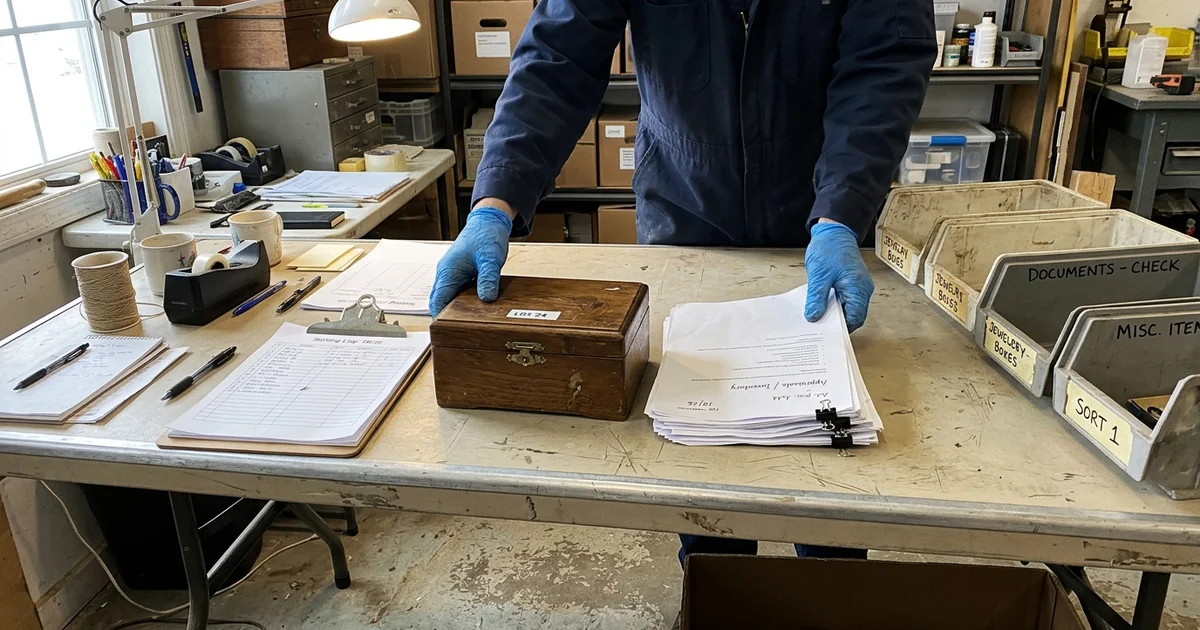
The first thing that arrives on a project is a folding table, not a dumpster.
Crews set up a sorting station in the clearest part of the house and assign people to nothing but triage. Every room is worked systematically, from the top of a stack downward, and material is separated into four streams.
| Stream | What it is | What happens to it |
|---|---|---|
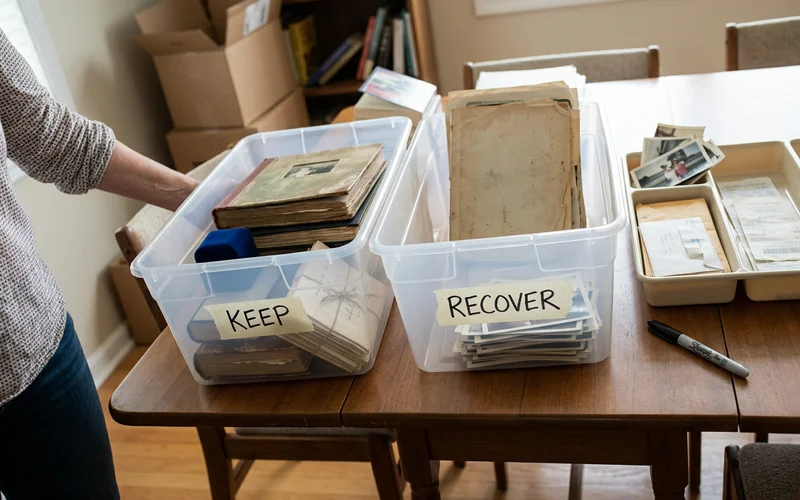
| Recover | Cash, jewelry, documents, heirlooms | Photographed, logged, set aside for you |
| Keep | Items you have identified as keeping | Bagged, labeled, placed in a designated room |
| Donate | Serviceable goods in usable condition | Boxed and delivered where you want them |
| Dispose | Everything else | Loaded, hauled, and disposed of properly |
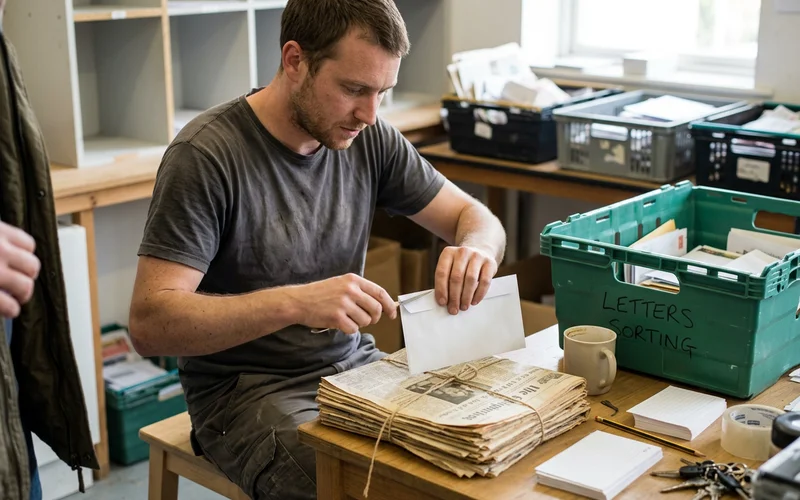
Paper is opened rather than binned, because paper is where deeds, bonds, and policies live. Containers are opened rather than tipped. Clothing pockets are checked. Books are fanned. It is slow, and the hours it takes are a visible line on your estimate.
This is the difference between remediation and junk removal
A junk hauler is paid by volume moved. Their incentive is speed. Ours is a written scope that includes sorting time, which is why the two prices are not comparable.
What gets recovered most often
Across our projects, the recurring finds are:
- Cash in envelopes, drawers, coat pockets, and between book pages
- Jewelry, particularly rings that stopped being worn for medical reasons
- Property deeds and vehicle titles
- Savings bonds, frequently decades old and still redeemable
- Tax records, often the only copies in existence
- Life insurance policies
- Military service records, discharge papers, and medals
- Photographs and photo albums, usually the items families care about most
The last one is worth saying plainly. When we ask families afterward what mattered most, it is almost never the money. It is the photographs.
Chain of custody, and why it protects everyone
Every recovered item is photographed and logged as it is set aside. The log goes into the Client Portal the same day, with images, so that anyone you authorize can see it from anywhere.
That record protects you, obviously. It also protects us, and it protects families from each other.
In estate situations where three siblings live in three states and only one was able to be present, a documented log removes an entire category of argument that otherwise surfaces months later. Nobody has to take anybody’s word for what was in the house. We have watched a documented log keep families intact, and we have heard about undocumented cleanouts that did the opposite.
What to tell us before day one
If you know something specific is in the house, say so. A will. A deed to a second property. A particular ring. A box of service medals. A firearm.
Knowing that changes how we sequence rooms and how carefully we work particular areas, and it costs you nothing to mention. Firearms in particular should be flagged in advance, and our crews include a former law enforcement officer for exactly that reason.
It is also worth telling us what you are not looking for. Families sometimes spend days worrying about furniture that nobody wants. Knowing that lets us move faster on the parts that do not matter and slower on the parts that do.
For the full sequence of a project, including what happens after the volume is out, our guide on the hoarding cleanup process walks through the timeline day by day.